SSI’s Aseem wins ALF early career research award
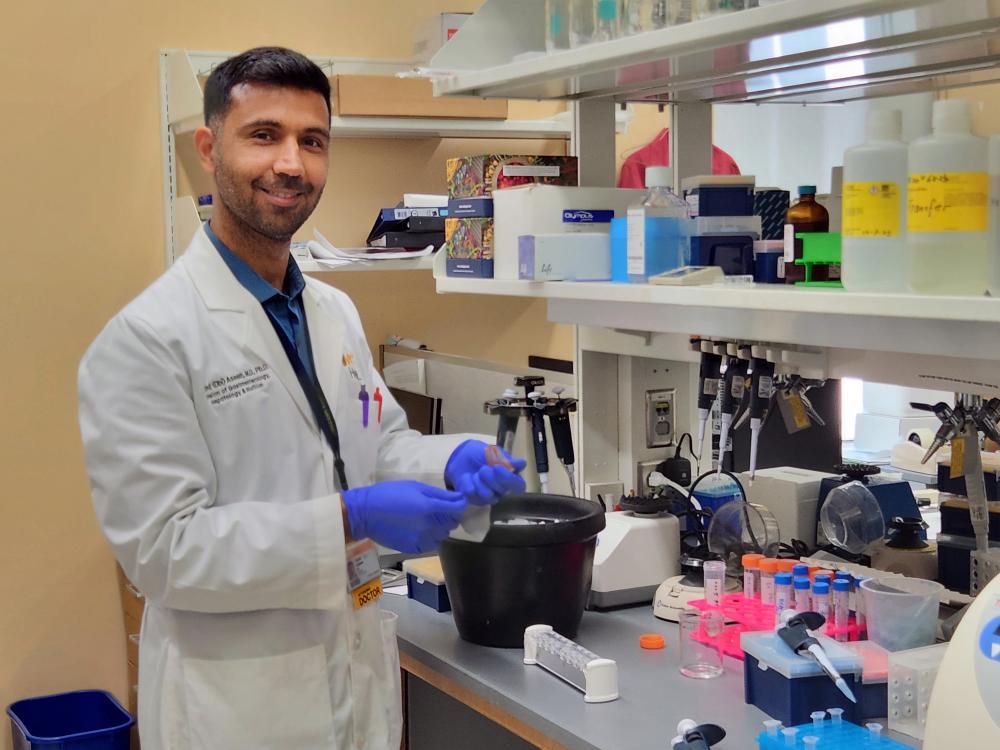 Faculty member Sayed “Obi” Aseem, M.D., Ph.D., is using a new $50,000, one-year research grant from the American Liver Foundation to further his work to understand bile duct related liver disease.
The ALF Pilot Research Awards provide funding to junior faculty during the pilot phase of research projects focused on new areas of investigation, innovative ideas or “high-risk, high-reward” projects that have the potential to generate breakthroughs and significantly advance the field.
Funded pilot projects are expected to acquire key preliminary data that will enable early career recipients to successfully compete for research awards from NIH and other national sources to support larger studies in these innovative research areas. Last fall, Aseem was awarded a prestigious NIH K08 grant in support of his work on the transcription factor RUNX1’s role in biliary fibrosis.
Aseem studies the molecular signaling and cellular interactions in biliary fibrosis, which might someday lead to potential therapies for patients with primary sclerosing cholangitis. The ALF awarded research project focuses on lipidomic changes in fibroinflammatory signaling in PSC.
Primary sclerosing cholangitis causes scarring in the bile ducts of the liver, leading to biliary fibrosis. It happens when the cells that line the bile ducts become active and send signals that attract other cells that cause scarring and inflammation around the ducts.
Scientists do not know what changes in the fats inside these bile duct cells help start the active process, making it difficult to develop good treatments for bile duct scarring. Aseem’s research has found that several fat-related changes happen in these cells. One important change is a drop in linoleic acid, caused by a signal in the body called TGF-beta -- known to cause scarring in many organs.
The drop in linoleic acid partly happens because TGFβ increases the amount of an enzyme called SCD. This enzyme changes fats inside cells. A drug called Aramchol blocks SCD and in Aseem’s studies, reduces inflammation and scarring signals in bile duct cells. It also lowered signs of bile duct scarring in mouse models of PSC.
Aseem plans to study how TGFβ and SCD change the fat patterns in bile duct cells using both cell studies and mouse models of PSC. By combining this information with gene activity data from the same areas, Aseem hopes to decipher the detailed molecular mechanisms that change fat patterns in PSC, leading to a better understanding how fat changes in bile ducts lead to inflammation and scarring in PSC. This could help scientists develop better treatments for this disease.